
1 March 2026
Confessions of a Surveyor
To the untrained eye, a well-maintained monohull is a masterpiece of maritime engineering. The gelcoat glistens under the marina lights, the teak is scrubbed to a golden hue, and the cabin smells faintly of high-end beeswax and expensive upholstery. However, for a professional marine surveyor, the true story of a vessel is never told on the deck or in the saloon. The real narrative, often a gothic horror, is written in the bilge.
The bilge is the repository of a boat’s secrets. It is where gravity sends every dropped nut, every weeping leak, and every structural failure. At SVG Marine, we have conducted countless inspections where the exterior suggested a vessel in its prime, only for the bilge to reveal a catalogue of catastrophic oversights. This is an exploration into the hidden world of structural issues and "quick fixes" that a comprehensive pre-purchase survey is designed to uncover.
The Illusion of Structural Integrity
One of the most common deceptions encountered during a marine survey involves the internal grid system or stringers. On many modern production monohulls, the structural strength is provided by a GRP (Glass Reinforced Plastic) grid bonded to the hull. When a vessel experiences a hard grounding or significant rig tension over time, these bonds can fail.
We frequently encounter "perfect" bilges where the owner has recently applied a fresh coat of flowcoat. To the casual buyer, it looks clean and professional. To a surveyor, it is an immediate red flag. Beneath that fresh paint, we often find evidence of delamination: where the structural stringers have physically detached from the hull skin.
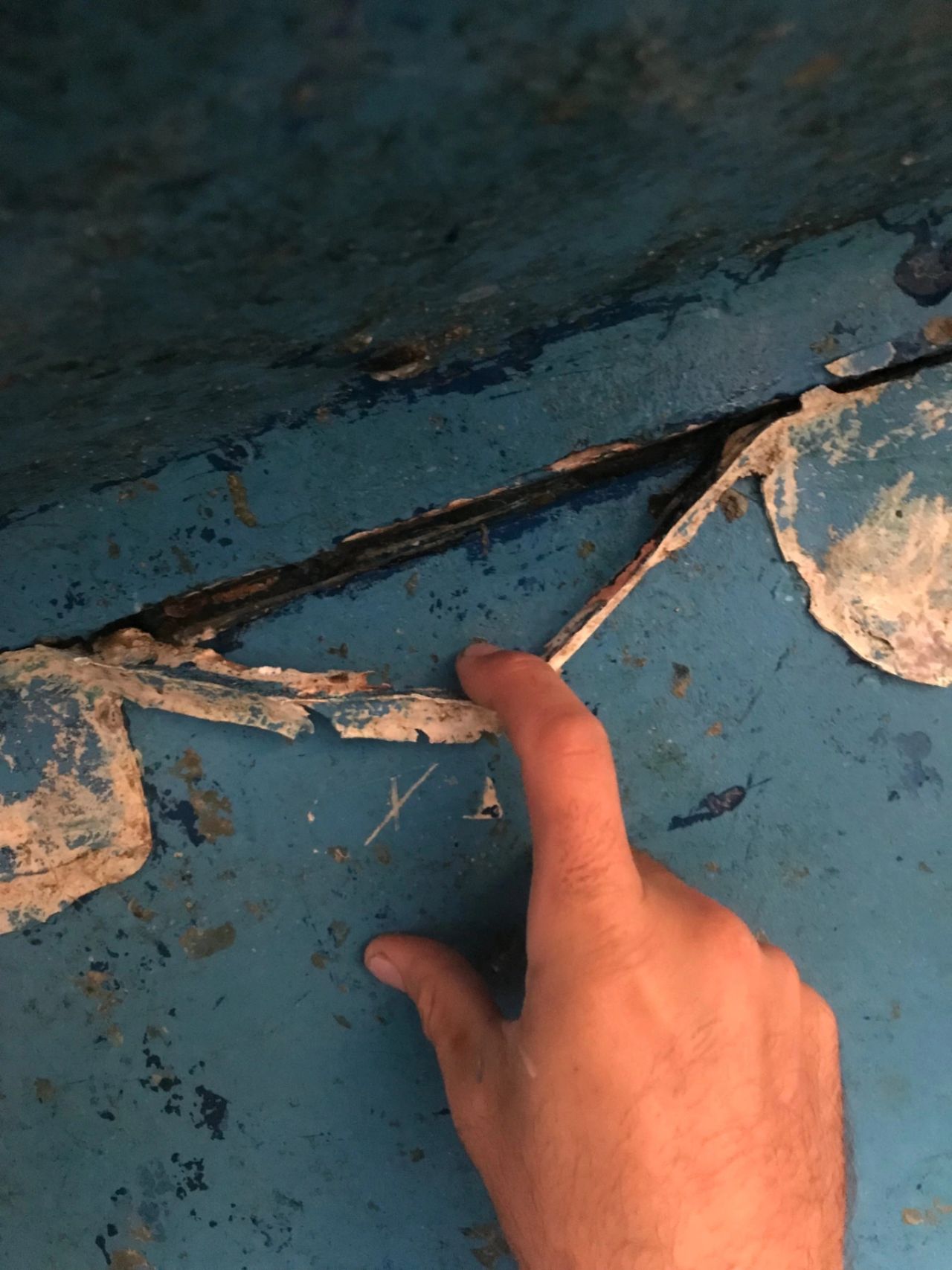
In several instances, we have discovered that "minor" cracks were actually full-thickness fractures in the laminate, crudely filled with automotive body filler and painted over. Without a professional using percussion testing and moisture meters, these failures remain invisible until the next time the boat hits a heavy sea. At that point, the "perfect" bilge becomes the primary source of a structural emergency.
The Electrical Spaghetti Monster
Marine electrical systems are frequently the victim of "useful" previous owners who believe they understand DC circuitry. In the dark recesses of a bilge, away from the neatly organized primary switchboard, lies a chaotic web of unauthorized wiring.
We have uncovered bilge pump circuits wired directly to batteries without fuses, using household-grade "chocolate block" connectors that are actively corroding in the damp environment. The scariest discovery, however, involves evidence of thermal events. During a damage survey, it is common to find melted insulation or fused wires tucked behind a bulkhead.
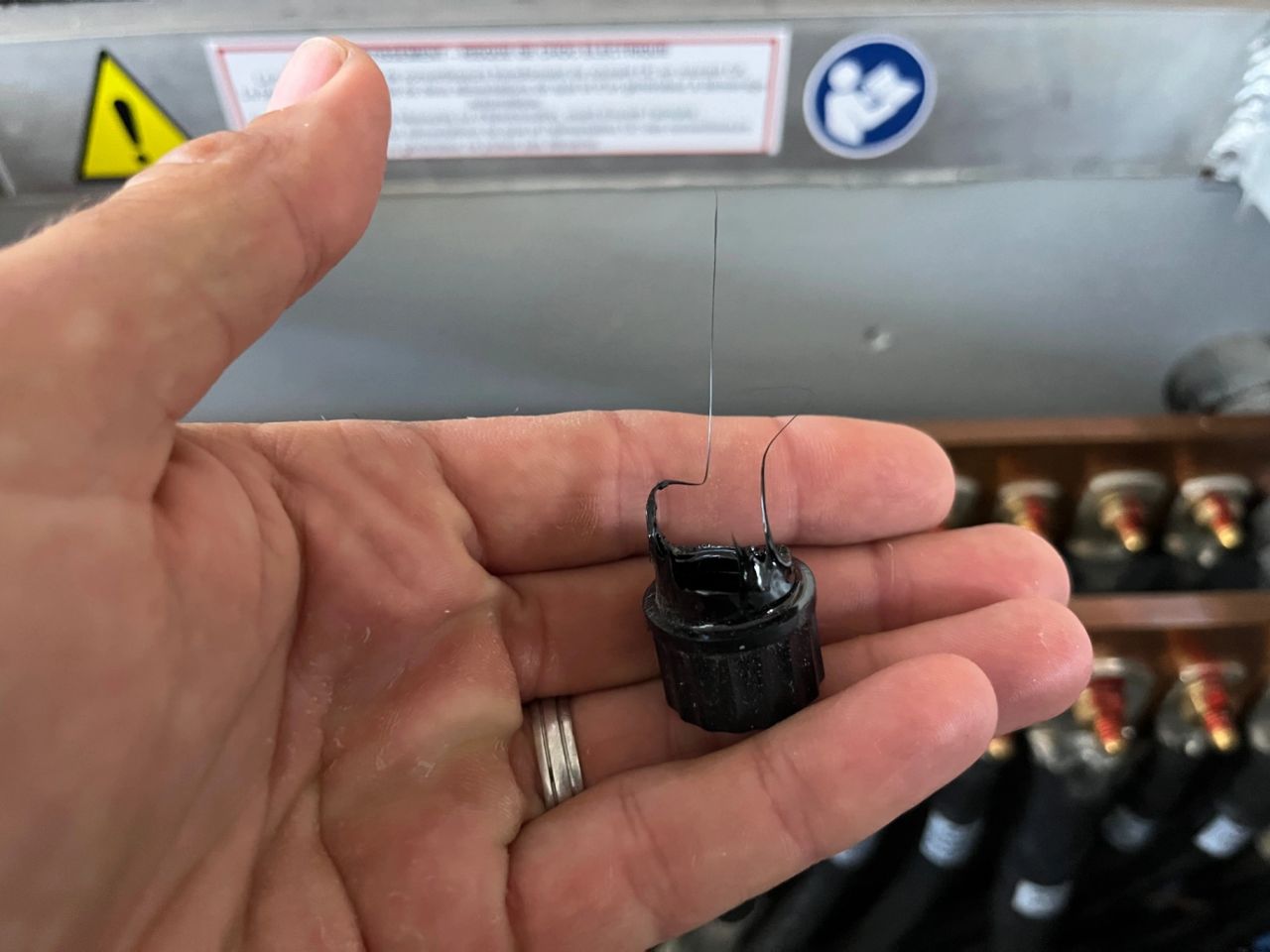
Electrical fires at sea are among the most dangerous scenarios a sailor can face. Finding a melted plastic component in a supposedly pristine bilge indicates that the vessel has already had a "near miss." It suggests a fundamental flaw in the over-current protection or a high-resistance connection that could reignite at any moment. A thorough inspection of the electrical architecture is a critical component of our yacht surveys in Southampton and beyond.
The Keel Bolt Conundrum and the 'Smile'
The connection between a lead or iron keel and the GRP hull is the single most important structural joint on a monohull. Owners often present a boat with a bilge that is dry and painted, claiming the keel bolts are "original and tight." However, the bilge often tells a different story if you know where to look.
"The Smile": a crack at the leading edge of the keel-to-hull joint, is a classic indicator of keel movement. Inside the bilge, this often manifests as weeping keel bolts. We have witnessed cases where owners have attempted to stop these leaks by tightening the nuts until the washers have crushed the underlying laminate, or worse, by encasing the entire bolt assembly in a thick layer of epoxy.

When we perform a pre-purchase boat survey, we look for rust staining around the washers, which indicates that water is bypassing the sealant and reaching the steel. In extreme cases, we have found keel bolts that have corroded to half their original diameter inside the laminate, while the top of the bolt looked brand new. This is why "just tightening the bolts" is never an acceptable solution for a structural leak.
Through-Hull Fittings: The Pink Brass of Death
Watertight integrity is the most basic requirement for any vessel. Through-hull fittings and seacocks are the primary guardians of this integrity. However, many production boats are fitted with "marine-grade" brass (DZR) or, in some unfortunate cases, standard yellow brass that is not truly resistant to dezincification.
In many "perfect" bilges, the seacocks are polished and the hoses are double-clamped. But upon closer inspection: often involving a light scrape of the metal, the surveyor finds the dreaded "pink" hue. This indicates that the zinc has leached out of the alloy, leaving behind a brittle, porous copper shell. We have seen seacocks that looked functional but snapped off in the surveyor’s hand with minimal pressure.
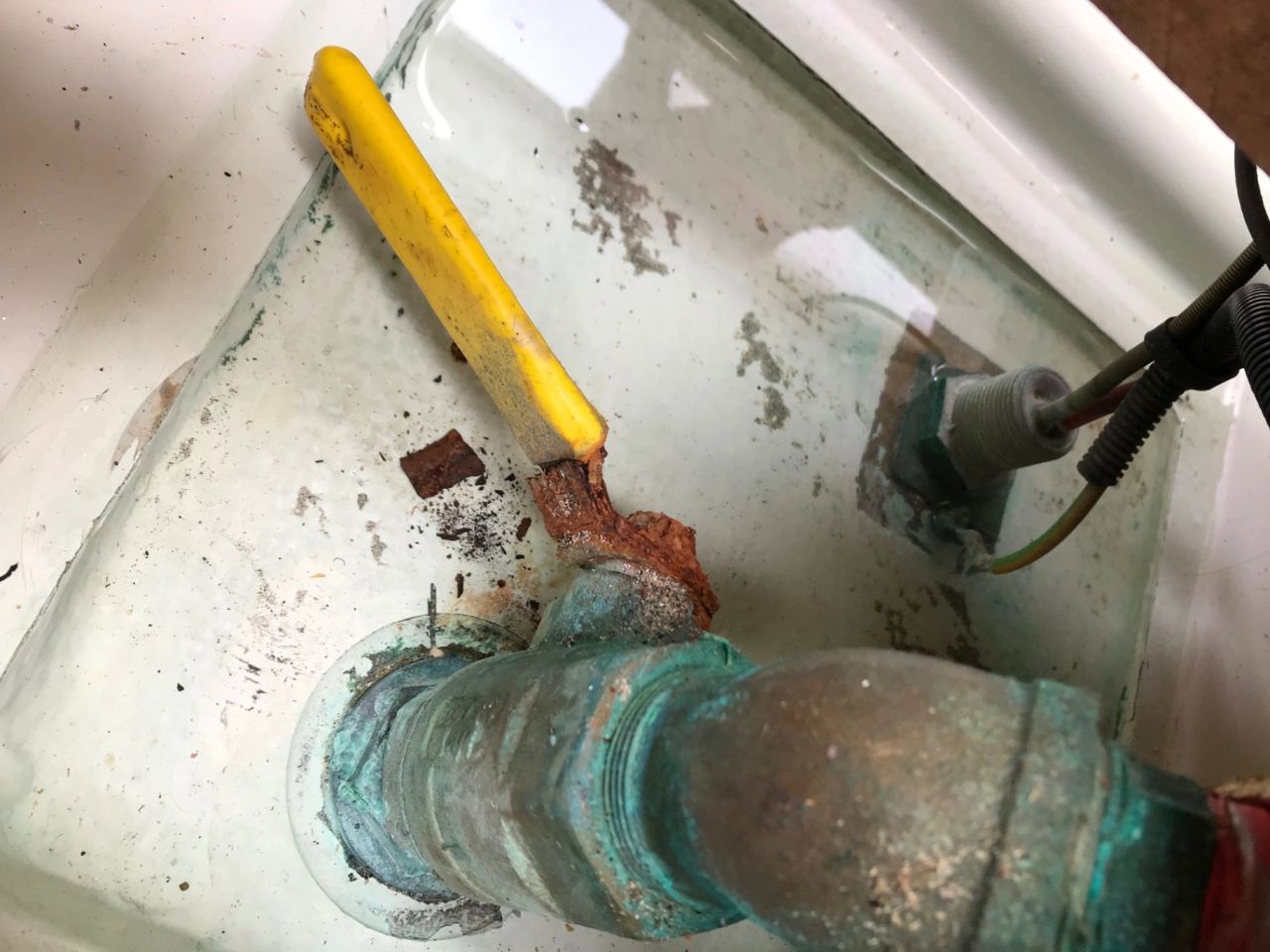
Verifying the material and condition of every hull penetration is an essential part of our commercial coding and private surveys. A failure here is not a slow leak; it is a catastrophic ingress of water that can sink a vessel in minutes.
The Hidden Cost of DIY Repairs
There is a specific type of horror reserved for the "innovative" DIY repair. We have seen bilge pumps held in place by blocks of wood that have long since rotted into a pulp, blocking the pump intake. We have seen stern glands leaking so badly that the owner installed a second, larger bilge pump rather than replacing the packing or the seal.
One particularly memorable survey involved a vessel where a structural bulkhead had started to rot at the base due to persistent bilge water. The solution chosen by the previous owner was to "reinforce" the bulkhead with a piece of plywood held in place by household bathroom sealant. This "repair" was then hidden behind a beautifully varnished trim piece. It was only when our surveyors checked the moisture levels and the structural bond that the extent of the rot was discovered.
Why Professional Inspection is Non-Negotiable
The common thread in all these "confessions" is that the issues were not visible during a casual walkthrough. A buyer might spend an hour looking at the galley and the cabins, but they rarely spend four hours upside down in the bilge with a high-intensity torch, a moisture meter, and a sounding hammer.
At SVG Marine, our role is to provide an objective, technical assessment that cuts through the cosmetic fluff. Whether it is a pre-delivery inspection for a brand-new yacht or an insurance survey for a seasoned cruiser, our focus remains on the critical systems that keep the boat afloat and the crew safe.
If you are considering a purchase, do not be swayed by a clean bilge. A bilge that is "too clean" or recently painted should be treated with the same suspicion as a car engine that has just been steam-cleaned. It is often a mask for reality.
To ensure your next vessel is truly as "perfect" as the broker claims, contact the experts at SVG Marine. Our comprehensive yacht survey portfolio demonstrates our commitment to uncovering the truth, no matter how deep it is buried in the bilge.
For more information on our services or to book a survey, visit our contact page or read what our clients have to say on our reviews page. Your safety at sea begins with a survey you can trust.