6 April 2026
The Ultimate Guide to Yacht Surveying in the UK & Europe (2026)
Buying a yacht in 2026 requires more than enthusiasm and a sea trial. It requires evidence. Brokerage stock across the UK, Europe, and many international cruising hubs is ageing, systems are more integrated than ever, and the financial consequences of missing a structural or compliance issue can be substantial.
At SVG Marine, our philosophy is simple: 15 Years. 200+ Surveys. Zero Compromises.
Whether the vessel is a family cruising monohull on the South Coast, a blue water catamaran in France, a commercial-coded yacht in Spain, or a superyacht above 24 metres in the Mediterranean, the purpose of a professional marine survey remains consistent: to establish condition, identify defects, assess risk, and provide a clear basis for informed decisions. This guide is designed as a practical, technical reference for buyers, owners, lenders, and operators who need more than broad generalities.
Why Marine Surveying is Critical in 2026
The modern yacht market is carrying more hidden risk than many buyers first appreciate. A substantial proportion of the active brokerage fleet was built between the 1990s and the late 2000s. Those vessels may still present well cosmetically, but age-related fatigue, deferred maintenance, water ingress, outdated installations, and undocumented modifications often sit beneath polished gelcoat and recently valeted interiors.
A proper pre-purchase yacht survey is therefore not a formality. It is a structured risk-management exercise. In 2026, insurers, lenders, and prudent private buyers increasingly expect a detailed independent condition assessment before committing funds. On older vessels, underwriters regularly focus on:
- Hull condition: Moisture ingress, laminate integrity, corrosion, localised impact damage, and keel attachment condition
- Through-hull fittings: Material compatibility, age, de-zincification, and bonding arrangements
- Rig age and support structure: Standing rigging service life, chainplates, mast step condition, and deck compression
- Machinery and systems: Fuel system integrity, battery installation, electrical protection, steering gear, and fire risk
- Safety and compliance: Lifesaving appliances, gas installation, coding status, and documentary compliance
The point is straightforward. The cost of a survey is usually small relative to the cost of unexpected structural repairs, major systems rectification, VAT disputes, or compliance failures discovered after completion.
The 2026 Regulatory Environment: UK, EU, VAT, RCR, RCD, and Post-Brexit Movement
The regulatory picture in 2026 is one of the main reasons a marine surveyor must understand more than hull condition alone. Buyers moving vessels between the UK, EU member states, offshore jurisdictions, and international cruising grounds are often exposed to paperwork and status issues that can materially affect value and ease of ownership.
RCR and RCD: Similar Framework, Different Markets
Since Brexit, the UK operates under the Recreational Craft Regulations (RCR), while the EU continues under the Recreational Craft Directive (RCD) framework. In practice, the technical requirements are closely aligned, but the administrative and market consequences are not identical.
For buyers, the important questions are:
- Does the vessel carry appropriate conformity marking for the market in which it will be placed into service or sold?
- Is the Declaration of Conformity present and credible?
- Is the owner’s manual, builder’s plate, CIN/HIN, and technical file support documentation available?
- Has the vessel been substantially modified after first placement on the market?
- If imported, was post-construction assessment required and properly completed?
A surveyor does not replace a maritime lawyer or tax specialist, but an experienced survey often identifies the warning signs early. Missing plates, inconsistent builder documentation, engine serial mismatches, amateur modifications, and absent conformity paperwork can all become future saleability issues.
VAT Status and Documentary Risk
VAT status remains one of the most misunderstood areas of yacht ownership. Buyers regularly assume that because a vessel is physically lying in an EU marina, or because a broker states “VAT paid,” the matter is settled. It is not always that simple.
Practical due-diligence points include:
- Original VAT invoice or chain of title evidence
- Importation records where relevant
- Customs documentation if the vessel has crossed between UK and EU regimes post-Brexit
- Corporate ownership structures that may complicate tax treatment
- Temporary admission or transit status for non-EU or non-UK vessels
- Refit or commercial-use history that may affect tax assumptions
The survey process frequently runs in parallel with documentary review. Structural condition and tax status are separate issues, but both shape the real value of a deal.
Post-Brexit Imports and Returns
Post-Brexit yacht transactions often involve movement between the UK and EU customs territories. Buyers need to be particularly careful when a vessel:
- Was UK-based pre-Brexit but later moved to the EU
- Was EU-based and has since been imported into the UK
- Is advertised in one territory but registered or taxed in another
- Has changed ownership while outside its original customs territory
Returned Goods Relief, evidence of location at key dates, import VAT liabilities, and local customs interpretation can all become relevant. A survey report will not determine tax law, but a technically informed surveyor helps ensure the buyer is not focusing only on cosmetics while ignoring potentially costly documentary exposure.
The SVG Marine Inspection Process
A thorough yacht survey is methodical. It combines visual examination, percussion testing, moisture profiling, systems assessment, documentary review, and where appropriate, specialist non-destructive testing techniques. For a typical 12-metre sailing yacht, the inspection can consume a full day onsite, often more when systems access is poor or the vessel is technically complex. Reporting then continues well beyond the physical attendance.
1. Structural Integrity and Hull Condition
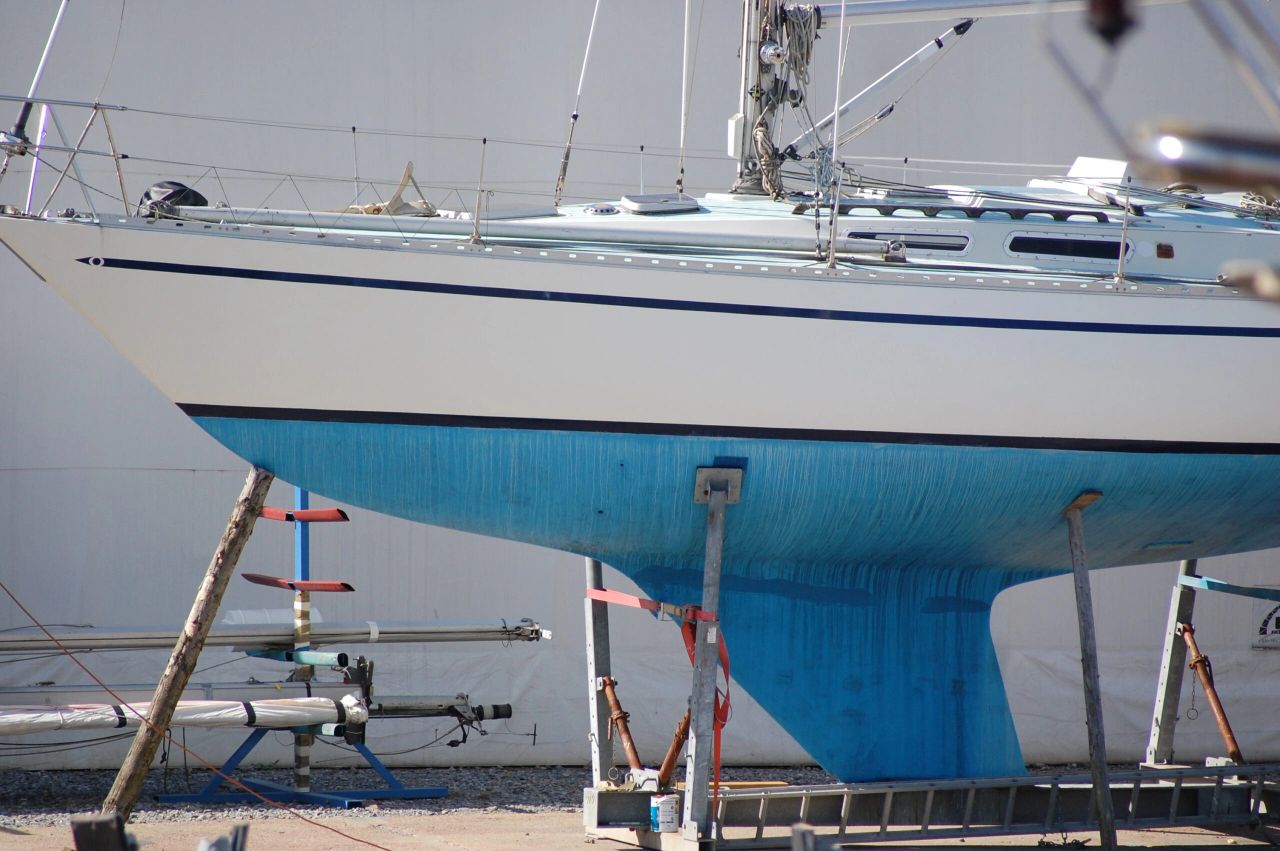
The hull remains the foundation of the survey. Laminate defects, localised impact damage, stress cracking, print-through, previous repairs, water ingress into sandwich construction, and osmosis all require careful interpretation rather than assumption.
We use moisture detection, percussion sounding, close visual inspection, and material-specific assessment methods to build a condition profile. In metal construction, ultrasonic thickness testing is essential for identifying plate wastage, pitting, and internal corrosion that may not be visible externally.
Critical structural focus areas commonly include:
- Keel and keel matrix: Cracking, movement, impact history, bolt condition, and local distortion
- Hull-to-deck joint: Sealant failure, fastener condition, movement, and historic leaks
- Deck cores: Compression around fittings, moisture ingress, localised softness, and delamination
- Bulkheads and tabbing: Separation, cracking, secondary bond failure, and evidence of overloading
- Rudder and bearings: Water ingress, play, stock corrosion, and hidden impact damage
2. Underwater Gear and Stern Gear
The underwater package requires close attention because these components live in a hostile environment and often show deterioration before owners realise it. The propeller, shaft, P-bracket, cutlass bearing, rudder gear, seals, anodes, and skin fittings all have direct safety implications.
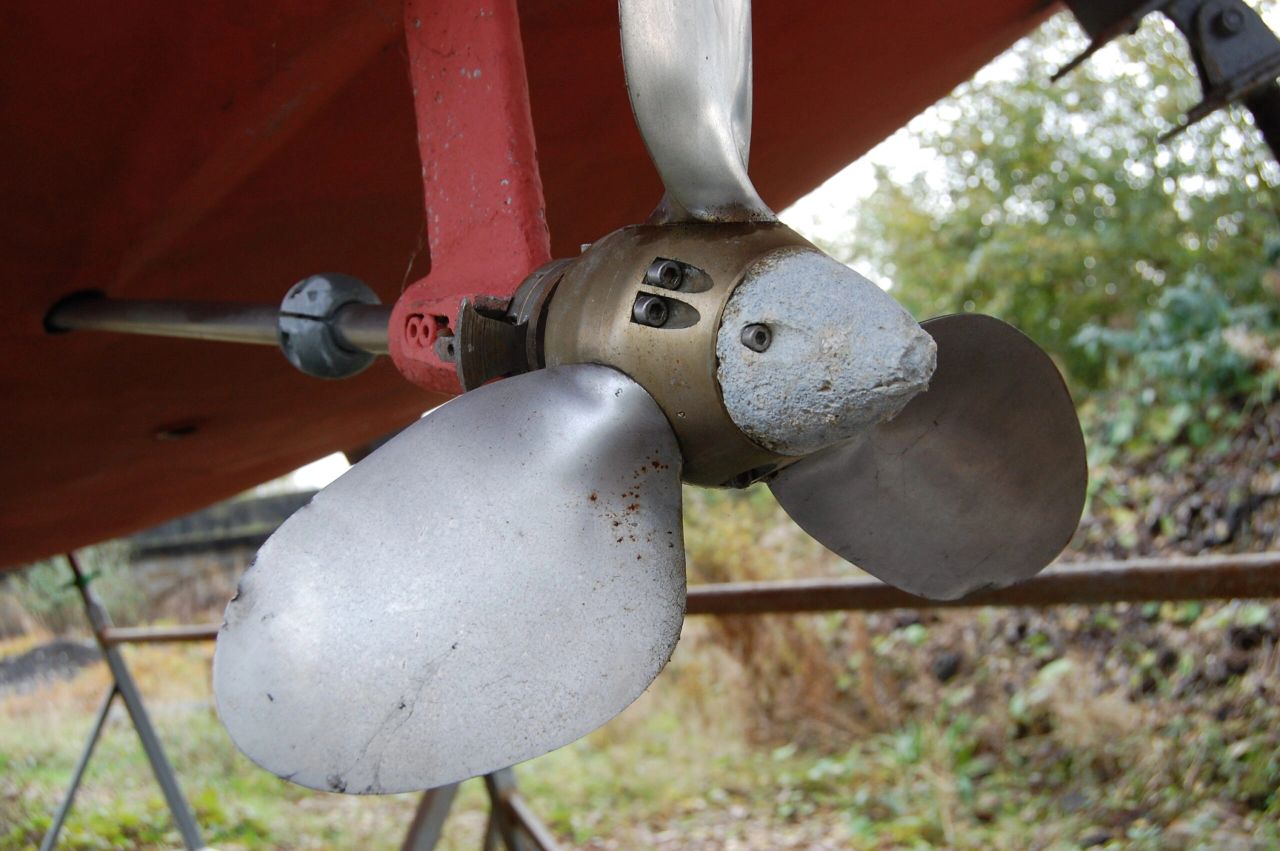
Common findings include:
- De-zincification: Particularly in older bronze or brass components, often visible as pink coloration
- Electrolytic or galvanic corrosion: Frequently linked to poor bonding, marina stray current exposure, or incompatible metals
- Bearing wear: Resulting in misalignment, vibration, or stern tube stress
- Impact damage: Bent blades, shaft runout, rudder trauma, or grounding evidence
- Aged through-hulls and seacocks: Especially composite-metal mixed installations or undocumented replacements
If these components fail afloat, consequences can be immediate. A well-written report should therefore do more than note deterioration. It should explain severity, and repair priority.
3. Electrical and Systems Analysis
Modern yachts are heavily system-dependent. Electrical, charging, plumbing, gas, navigation, steering, and electronic integration faults are now among the most common sources of post-purchase cost escalation.
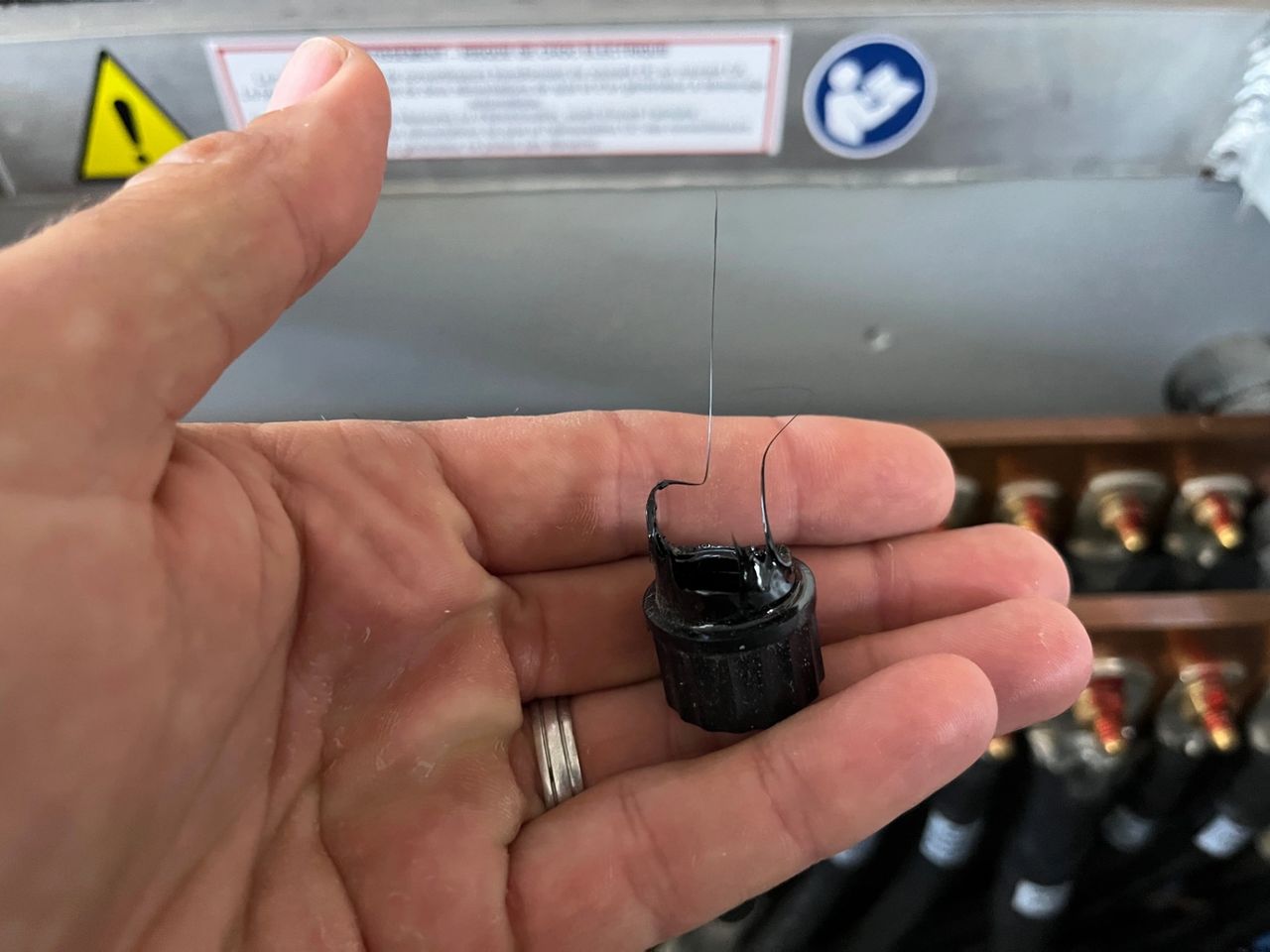
Inspection scope typically includes:
- Battery banks: Installation security, ventilation, age profile, chemistry compatibility, and overcurrent protection
- Charging systems: Alternators, inverter/chargers, shore power arrangements, galvanic isolation, and cable sizing
- AC/DC distribution: Labelling quality, circuit protection, workmanship, and evidence of overheating
- Fuel systems: Hose condition, clips, fire resistance, filtration, tank support, and contamination risk
- Gas systems: Locker integrity, regulators, pipework, shut-offs, and test status
- Steering and controls: Cable wear, hydraulic leaks, quadrant condition, and emergency arrangements
A vessel can appear impressive at first viewing yet hide poor electrical practice behind liners and lockers. Heat damage, overloaded conductors, improvised battery additions, and undocumented equipment upgrades are all regular findings.
Advanced Non-Destructive Testing (NDT): What It Adds to a Modern Marine Survey
Non-Destructive Testing is one of the clearest distinctions between a superficial inspection and a high-level technical survey. Not every boat requires every tool, but on the right vessel, advanced NDT can materially improve defect detection and reduce uncertainty.
Ultrasonic Thickness Testing
Ultrasonic testing is particularly valuable on steel and aluminium yachts, commercial vessels, and selected metal appendages. By measuring material thickness through coatings, the surveyor can assess whether plate wastage, corrosion, or pitting has materially reduced structural margin.
Ultrasound is commonly used on:
- Hull plating
- Tank tops and internal structure
- Bulkheads in way of damp or poor coatings
- Metal rudder stocks or fabricated appendages
- Aluminium superstructure areas vulnerable to crevice corrosion
The key is interpretation. Isolated low readings may indicate local coating breakdown or pitting. More widespread loss may point to poor maintenance, long-term standing water, failed insulation, or stray current corrosion. Buyers of metal yachts should treat ultrasonic mapping as a serious part of the decision process, not an optional extra.
Thermal Imaging
Thermal imaging is one of the most useful modern survey tools when correctly applied. It does not “see through” structures in a magical sense, but it can reveal temperature anomalies that correlate with defects, water ingress, overloaded electrics, poor insulation, and abnormal equipment behaviour.
On yacht surveys, thermal imaging can assist with:
- Electrical hot spots: Overheating breakers, terminals, chargers, inverters, busbars, and cable runs
- Moisture-related anomalies: Particularly in decks, coachroofs, and some cored structures where thermal contrast helps target further investigation
- Mechanical irregularities: Bearing heat, shaft seal heat, engine cooling imbalance, or abnormal exhaust temperatures
- Refrigeration and HVAC performance: Identifying poor circulation, insulation issues, or component inefficiency
Thermal imaging must always be correlated with physical inspection and experience. A thermal anomaly is not a diagnosis on its own. It is an indicator that directs the surveyor to the right question.
Moisture Mapping and Delamination Assessment
Moisture meters are useful but frequently misunderstood. Elevated readings do not automatically mean osmosis. Nor do normal readings guarantee structural dryness. Hull laminate type, salinity, coatings, temperature, internal linings, and embedded metallic items all influence results.
A proper approach combines:
- Comparative moisture profiling
- Percussion sounding
- Visual analysis of blistering or repair history
- Inspection of internal structural supports
- Assessment of likely water paths from fittings or deck penetrations
In cored hulls and decks, the objective is often to determine whether water ingress is localised and manageable, or whether it indicates widespread core degradation.
Dye Penetrant and Specialist Follow-Up
In certain circumstances, especially on metal fittings, fabricated brackets, weld areas, or suspect cracking zones, dye penetrant testing or specialist engineer follow-up may be recommended. Chainplates, mast step components, weld toes, and heavily loaded custom structures can justify a higher level of scrutiny when visual evidence suggests fatigue or stress concentration.
The practical point for buyers is simple: advanced NDT does not replace a full survey. It strengthens it.
Types of Marine Surveys
Not every vessel requires the same scope. The right survey depends on the transaction, the vessel type, and the intended use.
- Pre-Purchase Yacht Survey: The most comprehensive condition survey, suitable for purchase decisions and negotiations
- Insurance Renewal Survey: A focused assessment aimed at structural condition, safety, and insurability
- Pre-Sale Survey: A proactive inspection for owners who want to identify defects before listing
- Pre-Delivery Inspection: Critical on new builds and recently completed refits where finish quality, commissioning, and warranty issues matter
- Tonnage Measurement: Necessary for Part 1 British Registration and certain Red Ensign requirements. We provide authorized tonnage measurements for vessels under 24m
- MCA Commercial Coding: Essential where charter or coded operation is intended. We support owners through the commercial coding process and associated compliance checks
A Surveyor’s Checklist for the First Viewing
A buyer should not attempt to replace a professional marine survey during a casual viewing. However, a disciplined first pass can help decide whether a vessel is worth progressing. The following checklist is practical, quick, and useful before instructing a full boat survey.
Documentation and Identity
- Check the HIN/CIN: Confirm it appears consistent with paperwork
- Review registration details: Ownership name, registry, and tonnage data where applicable
- Ask about VAT evidence: Do not accept “VAT paid” without documentation
- Request maintenance records: Engine hours, rig replacement, seacock renewal, osmosis treatment, and major refits
- Confirm conformity paperwork: CE/UKCA/RCD/RCR documentation if relevant to age and market
Hull and Deck
- Stand back and sight the hull: Look for unfairness, waviness, distortion, or mismatched gloss
- Inspect around keel area: Search for cracking, repairs, filler lines, or grounding clues
- Check deck around fittings: Signs of compression, staining, or softness near stanchions, chainplates, and mast partners
- Look inside lockers and bilges: Dampness, corrosion, neglected systems, and poor access often reveal the true standard of care
- Assess windows and hatches: Internal staining may indicate long-term leaks
Machinery and Systems
- Open the engine space: Cleanliness matters, but look beyond cosmetics to hose age, clamps, leaks, and wiring quality
- Check battery installation: Security, cable size, fuse protection, and general orderliness
- Operate key systems if possible: Bilge pumps, navigation equipment, heads, refrigeration, windlass, thrusters
- Smell for warning signs: Fuel vapour, burnt insulation, sewage, and chronic damp all matter
Rig and Deck Gear
- View chainplates and mast base: Corrosion, staining, cracking, and hidden water ingress are common issues
- Ask the age of standing rigging: If unknown or old, budget accordingly
- Inspect winches and deck hardware: Neglect shows quickly in heavily used equipment
- Look at sail handling gear: Wear, UV damage, and distortion can indicate broader maintenance patterns
General Ownership Clues
- Consistency matters: A tidy saloon does not offset chaotic systems spaces
- Recent cosmetic work can hide defects: Fresh paint or lining replacement warrants closer questioning
- An honest paper trail adds value: Well-documented maintenance usually reflects a better ownership culture
If a vessel passes this first-viewing sense check, that is the moment to commission a professional marine surveyor, not the moment to relax.
Blue Water Catamarans and Multihull Surveys: Why They Require Specific Experience
Multihulls deserve dedicated attention because their structure, load paths, machinery layout, and operational profile differ materially from monohulls. The market for offshore cruising catamarans, including brands such as Sunreef, Lagoon, Gunboat, Outremer, Fountaine Pajot, Leopard, and Bali, remains strong in 2026. That popularity, however, should not obscure the survey complexity involved.
Structural Characteristics That Matter
A blue water catamaran is not simply “two hulls and more space.” It is a platform where loads are distributed across hull shells, bridge deck structure, crossbeams, bulkheads, furniture integration, rig support zones, and large deck openings. Surveying this properly requires understanding how these areas work together.
Common multihull focus points include:
- Bridgedeck slamming zones: Repeated impact loading can produce cracking, debonding, local laminate fatigue, and internal witness marks
- Crossbeam and forward structure: Particularly on performance and offshore cats where pounding loads accumulate
- Bulkhead bonding: Separation or print-through may indicate deeper structural movement
- Mast compression paths: The rig loads are often tied into major bulkheads and bridge deck structure
- Hull asymmetry or repair evidence: Even subtle differences between port and starboard can indicate historic damage
Escape Hatches and Offshore Safety
On many offshore catamarans, escape hatches are a critical safety feature rather than a minor fitting. Their condition, sealing, accessibility, and integrity matter. Survey observations often include:
- Frame and fastener condition
- Seal degradation
- Evidence of impact or stress
- Internal access obstruction
- Water ingress staining around recesses
Poor maintenance in these areas is not merely inconvenient. It can compromise both seaworthiness and emergency escape functionality.
Complex Systems Across Two Hulls
One of the most underestimated aspects of catamaran ownership is system complexity. There are frequently duplicated or split systems running port and starboard, combined with long cable runs, extensive plumbing, multiple heads, larger battery banks, inverter-heavy domestic loads, watermakers, air conditioning, solar integration, and generator installations.
Survey risk points commonly include:
- Long cable routes with inadequate support or protection
- Poor access to machinery in one hull
- Corrosion or moisture accumulation in low-access technical voids
- Imbalance between port and starboard tankage or equipment loading
- Complex steering linkages and dual-station controls
- Generator and inverter installation quality
- Watermaker plumbing and contamination risk
- Air-conditioning condensate and drainage problems
On premium cruising cats and owner-specified builds, modifications can be extensive. Added lithium systems, aftermarket davits, solar arches, tender platforms, and electronics packages may all affect weight, trim, structural load, and serviceability.
Brand-Specific Practical Realities
Sunreef, Lagoon, and similar production or semi-custom catamarans often present different survey profiles. Some buyers focus heavily on accommodation and finish, but the survey must look behind the joinery. Important considerations include:
- Factory commissioning quality
- Post-delivery warranty rectification history
- Evidence of charter use
- Moisture around deck hardware and flybridge structures
- Rudder bearing wear
- Window bonding and leak history
- Engine room ventilation and service access
- Hardtop and composite support integrity
A proper catamaran survey should therefore be approached as a specialist condition assessment, especially for blue water use.
Regional Expertise: UK, Mediterranean, Caribbean, and Worldwide
SVG Marine operates globally, with extensive practical relevance in the UK, Europe, and international cruising regions. Regional knowledge matters because climate, maintenance culture, marina infrastructure, regulatory expectations, and common defect patterns vary significantly.
Marine Surveyor UK: Southampton, South Coast, and Wider British Waters
The UK market, especially the Solent and South Coast, remains one of the busiest yacht transaction hubs in Europe. Typical regional issues include:
- Higher moisture retention in structures
- Heavy tidal wear on moorings and gear
- Corrosion associated with year-round marina exposure
- Ageing production boats with multiple ownership histories
- Osmosis prevalence in certain legacy GRP fleets
Our familiarity with UK yards and operating conditions supports more nuanced yacht surveys in Southampton and beyond.
Mediterranean: France, Italy, Spain, and Greece
The Mediterranean is not one market. It is several. Each region carries its own patterns.
France
France remains a key centre for production yacht sales, catamaran brokerage, and ex-charter stock. Survey attention often falls on:
- High-volume production builds
- Ex-charter wear hidden behind cosmetic turnaround
- Complex VAT and export histories
- Moisture around deck hardware and windows on heavily used boats
Italy
Italy offers a large selection of motor yachts, performance sailing yachts, and semi-custom builds. Typical issues can include:
- Sophisticated onboard systems requiring deeper systems knowledge
- Refit history of varying quality
- Air-conditioning, generator, and hydraulic system dependence
- Survey access challenges in tightly packed marinas or large custom interiors
Spain
Spain remains active for brokerage and liveaboard cruising vessels, with a mix of private and charter use. Attention points often include:
- UV-driven degradation of deck finishes, seals, and soft goods
- Stern-to mooring wear
- Long periods of marina inactivity followed by sale preparation
- Documentation gaps where ownership structures are layered
Greece
Greece is a major centre for charter fleets, private cruising yachts, and long-term laid-up boats. It is an important region for yacht surveyor in Greece work because local operating realities affect condition materially:
- Charter utilisation and high annual engine hours
- Grounding history in shallow anchorages
- Summer heat stress on seals, electronics, and batteries
- Variable maintenance standards across islands and yards
Caribbean and Worldwide
Caribbean and worldwide assignments introduce a different risk profile. Buyers looking at offshore cruising yachts, catamarans, expedition vessels, or relocated brokerage stock should consider:
- Hurricane exposure history
- High UV and salt load
- Tropical moisture effects on interiors and electrical systems
- Remote repair quality
- Deferred maintenance due to parts availability
- Import/export and registration complications across jurisdictions
Worldwide survey work is often less about one single defect and more about integrating technical condition with the vessel’s travel history, ownership trail, and suitability for its next operational role.
Superyachts Over 24m and the Large Yacht Code: LY3 and LY4 Considerations
Above 24 metres, yacht surveying becomes more layered. The vessel is often no longer just a leisure asset. It may be commercially operated, crewed, classed, professionally managed, and subject to flag-specific and code-based requirements. Surveying superyachts therefore requires a broader compliance and systems perspective.
Why >24m Is Different
A superyacht survey frequently extends beyond basic condition reporting into interactions with:
- Flag administration requirements
- Class records and survey status
- Commercial operation standards
- Safety management procedures
- Crew accommodation and manning implications
- Complex fire, lifesaving, and machinery systems
The buyer or owner is not simply asking, “Is the hull sound?” They are often asking, “What is this vessel’s true operational and compliance position?”
Large Yacht Code Compliance
For UK and Red Ensign associated commercial large yachts, the Large Yacht Code framework remains highly relevant. Depending on vessel age, flag, and operating profile, references to LY3 or evolving LY4 expectations may arise in operational and certification discussions.
Survey complexity may include:
- Fire protection arrangements: Boundaries, dampers, penetrations, extinguishing systems, and detection coverage
- Lifesaving appliances: Inventory, service dates, deployment arrangements, and compliance fit
- Stability documentation: Operational limitations, loading assumptions, and update history after modifications
- Machinery spaces: Fixed firefighting, shutdowns, ventilation closures, bilge systems, and escape arrangements
- Crew and guest safety: Means of escape, signage, watertight integrity, guardrails, and emergency systems
- Tender and lifting operations: Davits, cranes, SWL markings, maintenance evidence, and procedural control
- Modification control: Whether refits or cosmetic upgrades have affected coded compliance
Large yachts also often carry a much deeper refit and defect history than brokerage particulars suggest. Paint condition, deck wear, machinery overhaul status, AV/IT infrastructure, hotel loads, black/grey water systems, and class recommendations can all affect the real cost profile after acquisition.
Whilst not LY3, LY4 or Class Surveyors, SVG Marine’s background in larger yacht and superyacht surveys supports buyers and operators who need more than a lightweight overview.
Understanding Survey Costs in 2026
Transparency in pricing remains a core part of professional service. The exact cost of a marine survey depends on vessel type, construction, complexity, location, access, and intended scope. Broad market baselines are useful, but the cheapest quote is rarely the most economical outcome if the report lacks depth or misses material issues.
Note: Minimum fees apply (typically starting around £650). Specialist construction types such as steel or aluminium, advanced NDT requirements, large multihulls, complex systems packages, and superyacht assignments may require tailored quotations.
The SVG Marine Advantage: 15+ Years of Excellence
Appointing a marine surveyor is not simply a matter of buying a report. It is about securing experienced interpretation. A surveyor who has inspected a broad spread of yacht types, construction methods, and operational profiles can distinguish between cosmetic noise and meaningful risk.
Our about us page reflects that progression from UK yacht work to international projects, including complex multihulls, coded vessels, and larger yachts. The value to the client lies in structured, evidence-based assessment and practical guidance after the inspection is complete.
We do not simply identify defects. We help clients understand:
- What matters immediately
- What can be monitored
- What should affect price negotiation
- What may affect insurance or coding
- What should be budgeted in the first year of ownership
Modern Technology, Traditional Survey Discipline
Technology strengthens good surveying practice. It does not replace it. Thermal imaging, moisture profiling, and ultrasonic testing are valuable tools, but so are disciplined visual inspection, soundings, machinery observation, and physically accessing the awkward spaces where major problems often hide.
Our yacht survey portfolio reflects the range of vessels and assignments undertaken. The underlying principle remains constant: no shortcuts, no assumptions, and no compromise on clarity.
Final Thoughts for the 2026 Buyer
Yacht ownership remains one of the most rewarding forms of investment in lifestyle, travel, and operational freedom. It is also an area where optimism can easily outrun evidence. In 2026, that gap is widened by ageing fleets, integrated systems, cross-border regulation, VAT uncertainty, and the increasing technical demands of modern yachts.
A professional yacht survey brings that picture back into focus. It gives the buyer, owner, lender, or operator an informed basis for action. Whether the requirement is a pre-delivery inspection, a full pre-purchase assessment, a multihull review, a coding-related inspection, or large-yacht compliance support, the objective is always the same: clarity before commitment.
Ready to discuss a vessel in the UK, Europe, the Mediterranean, the Caribbean, or further afield? Contact us today to discuss your project. SVG Marine provides clear, in-depth reporting for clients who need certainty, not guesswork.